
Mastering AEO/GEO for Marketers in Manufacturing: 5 Key Strategies
Jonathan Mueller on Unsplash
We recently looked at how manufacturers are using Artificial Intelligence (AI) behind the scenes to level up their operations, but what about how marketing teams are using AI to sharpen their strategy and drive better results?
For years, marketers in manufacturing have invested serious time and effort into Search Engine Optimization (SEO): optimizing pages, creating content, and working to rank higher in traditional search results. And that work still matters. But the way AEC (Architecture, Engineering, and Construction) pros search for and find products is changing quickly. With the rise of AI, the search landscape is shifting toward something new: Answer Engine Optimization (AEO) or Generative Engine Optimization (GEO).
For marketers, the goal is no longer just to earn a spot on page one. It’s ensuring that your products are clearly understood, trusted, and surfaced by AI systems at the exact moment specifiers are searching for solutions. The good news is that many AEO/GEO best practices—like question-based content—also improve your SEO performance.

In this post, we’ll break down 5 practical steps you can take today to win at AEO/GEO, so your products are easier to discover and specify.
- Treat AI as a New Discovery Tool
- Create an llms.txt File to Guide AI Models
- Make Sure Your Content Answers Real Questions
- Track AI as an Emerging Lead Source
- Centralize Your Product Content
1. Treat AI as a New Product Discovery Tool
One of the biggest mindset shifts marketers need to make is recognizing AI as a new product discovery tool. The reality is that AEC pros are already turning to platforms like ChatGPT, Copilot, and other AI assistants to ask questions like:
- What building products and materials meet this performance requirement?
- Which manufacturers offer sustainable options for this application?
- What products are commonly specified for this use case?
Now’s the time to make sure AI knows who you are, what you offer, and exactly why your products belong in new designs.
Action to take: Start treating AI as a legitimate product discovery tool, right alongside organic search, your website, and specification platforms like CADdetails. Then, make sure your products are ready to be surfaced when specifiers turn to AI for answers by creating an llms.txt file and centralizing your product data—don’t worry, we’ll walk you through both below!
2. Create an llms.txt File to Guide AI Models
Just like robots.txt and sitemap.xml files help search engines crawl and interpret your website, a llms.txt file helps Large Language Models (LLMs) understand how to reference your content.
While standards are still evolving, an llms.txt file can help direct AI systems to your official, authoritative product information, rather than relying on third-party sources. It also helps reduce the risk of outdated, incomplete, or inaccurate information being surfaced in AI-generated responses.
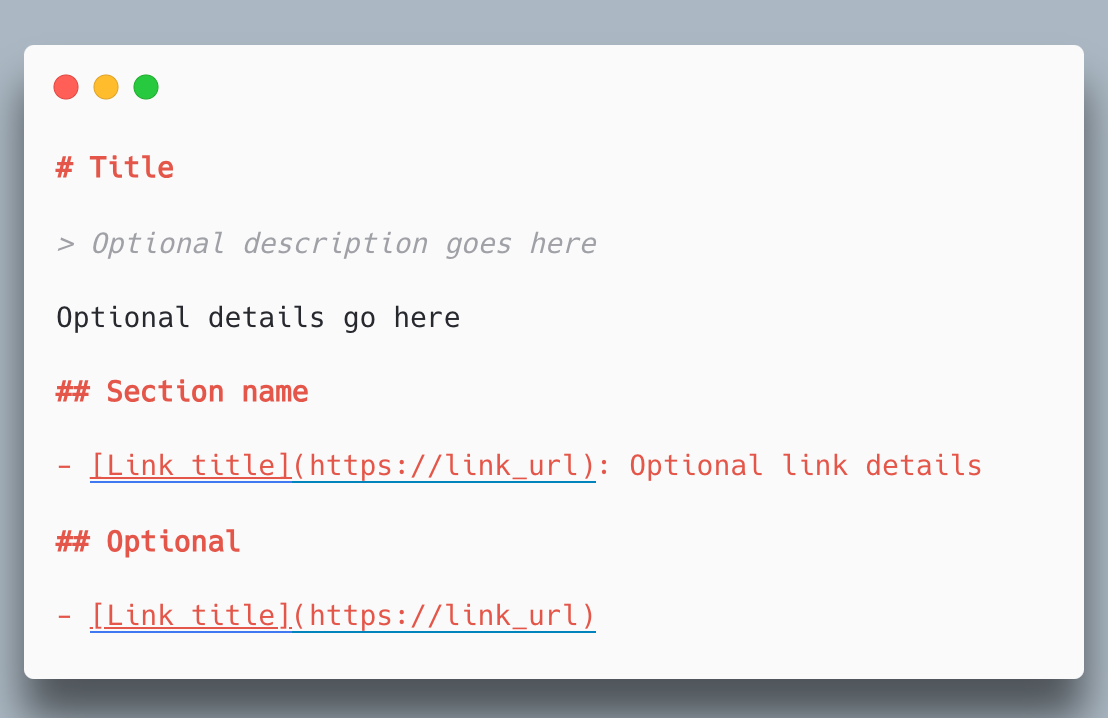
Here’s how to create an llms.txt file in 4 simple steps:
1. Identify your authoritative content: Compile links to your most accurate and up-to-date resources, including:
- Product pages
- Specifications and technical documentation
- BIM/CAD/3D libraries
- Certifications and sustainability materials
- Compliance, warranty, and installation info
2. Create a simple plain-text file formatted in Markdown: Organize your content in a clean, easy-to-scan format, and include direct links to relevant pages. This isn’t the place to showcase your brand personality, so prioritize clarity, structure, and accuracy over tone.
Here are some common Markdown elements you’ll want to use in your llms.txt file:
- # for an H1 heading, ## for H2s, ### for H3s, and so on
- > for blockquotes to call out important notes or descriptions
- - or * for bullet points in unordered lists
- [text](url) to create hyperlinks to your content
- : to add short descriptions next to links and clarify what they reference
And here’s a helpful example to reference while you’re creating your own llms.txt: https://www.quo.com/llm-info.
3. Host your file at the root of your domain: Place your file at the top level of your website, where crawlers and automated systems can easily find it. It should look like this:
https://www.yoursite.com/llms.txt
Also, make sure the file is publicly accessible (no login required and no forms to fill out). If AI systems can’t access it freely, they won’t use it.
4. Keep it updated: Review the file quarterly to ensure everything remains current and aligned with your latest offerings.
3. Make Sure Your Content Answers Real Questions
AI systems prioritize content that directly answers practical questions. That means creating structured, well-organized product content designed not just for humans, but for machines to interpret correctly.
For manufacturing marketers, this is a major opportunity to refine your content strategy. LLMs tend to favor content that is clear, structured, and written in a Q&A or FAQ-style format because it mirrors how users actually search. Adding well-optimized question-based content can even boost organic traffic by up to 20%!
Action to take: Take a look through your current product pages and resources and see where key questions aren’t being answered, then fill those gaps with question-based content. A great place to start is by adding FAQs to existing product pages and case studies and writing simple Q&A blog posts that tackle common performance, code, and installation questions.
4. Track AI as an Emerging Lead Source
As AI-driven discovery continues to grow, you may notice a shift in how prospects engage with you. For example, leads may come in already familiar with your products, or skip the early education phase altogether, leading to shorter sales cycles and more informed conversations.
That’s often a sign that AI is shaping buyer research before they ever visit your website or submit a form, working upstream of your traditional funnel.
Action to take: Start capturing AI-driven influence by updating lead forms, sales conversations, and reporting to include questions like:
- How did you hear about us?
- What research did you do before reaching out?
- Did you use any AI tools during your search?
You may be surprised how often AI is part of the story.
5. Centralize Your Product Content
AI models favor clarity. When your product content is scattered across personal folders, shared drives, and disconnected systems, your brand becomes harder to interpret and easier to overlook. Plus, if your internal systems are fragmented, AI models will surface that same inconsistency back to AEC pros—if they even bring up your products at all.
Action to take: Consider adopting an all-in-one DAM (Digital Asset Management) and PIM (Product Information Management) platform like Prodify to manage your product content. A strong AEO/GEO strategy starts with all your files centralized and structured in one system, so accurate product information is ready to be surfaced wherever design pros are searching.
Get AI-Ready with Prodify
As a marketer in manufacturing, you know the challenge of managing a growing library of product files: CAD/BIM/3D assets, specifications, images, videos, brochures, certifications, SKUs, dimensions, pricing info… the list goes on.
When those files live across multiple systems, shared drives, or spreadsheets, there’s no single, connected source of truth. That fragmentation makes it harder for AI systems to understand, trust, and mention your products to AEC pros.
That’s where Prodify comes in. By centralizing your product data and digital assets in one system, Prodify keeps everything organized across every channel—helping AI models surface your most reliable, up-to-date information when specifiers go looking for product recommendations.